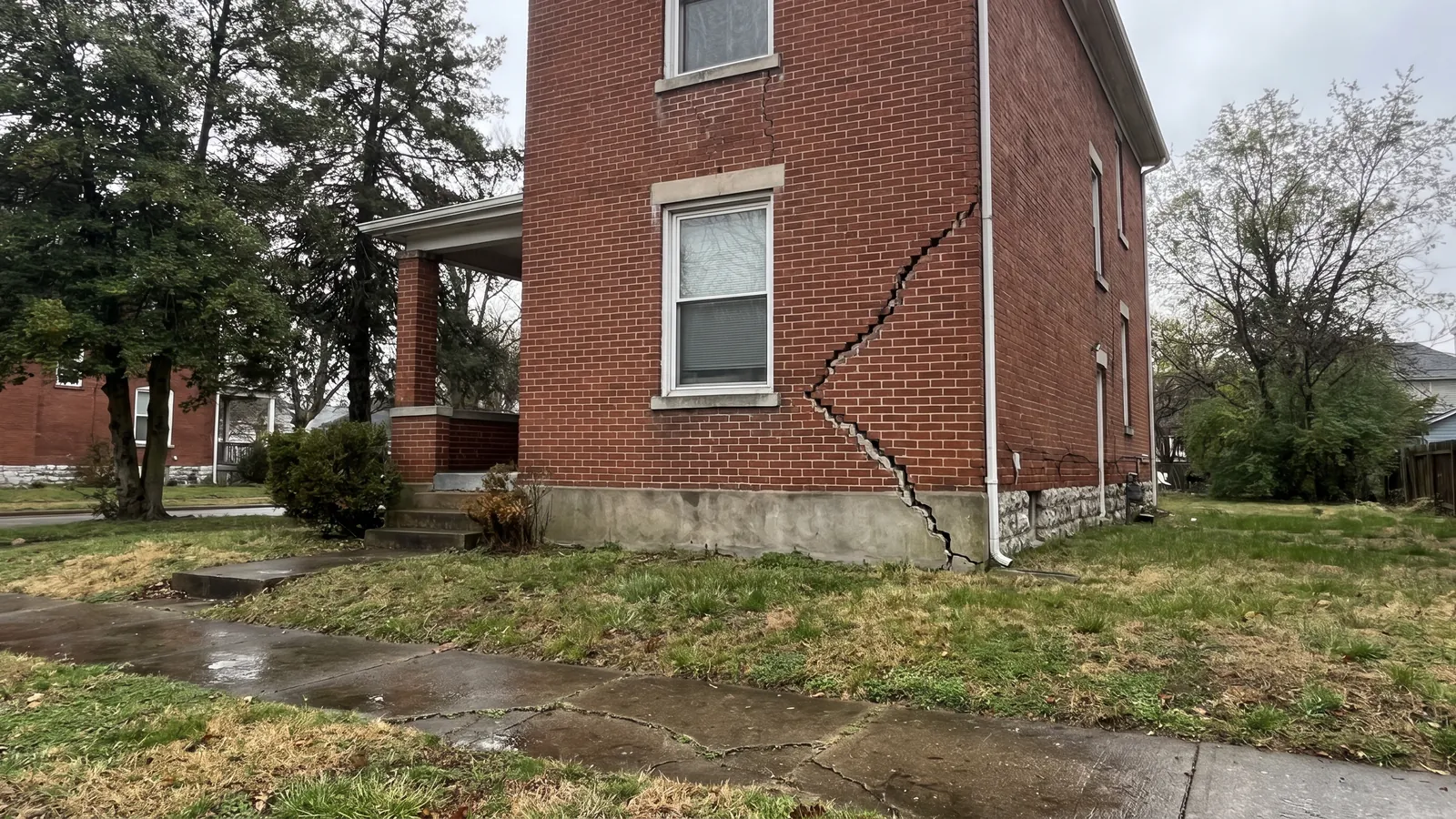
Settlement is a footing going down because the ground under it gave way. In Louisville that usually means clay that shrank in a dry spell and never fully came back, fill soil that compressed under a newer addition, or, less often, a void in the limestone below. One corner or one side drops; the rest of the house tries to stay put, and the drywall, brick and door frames take the strain.
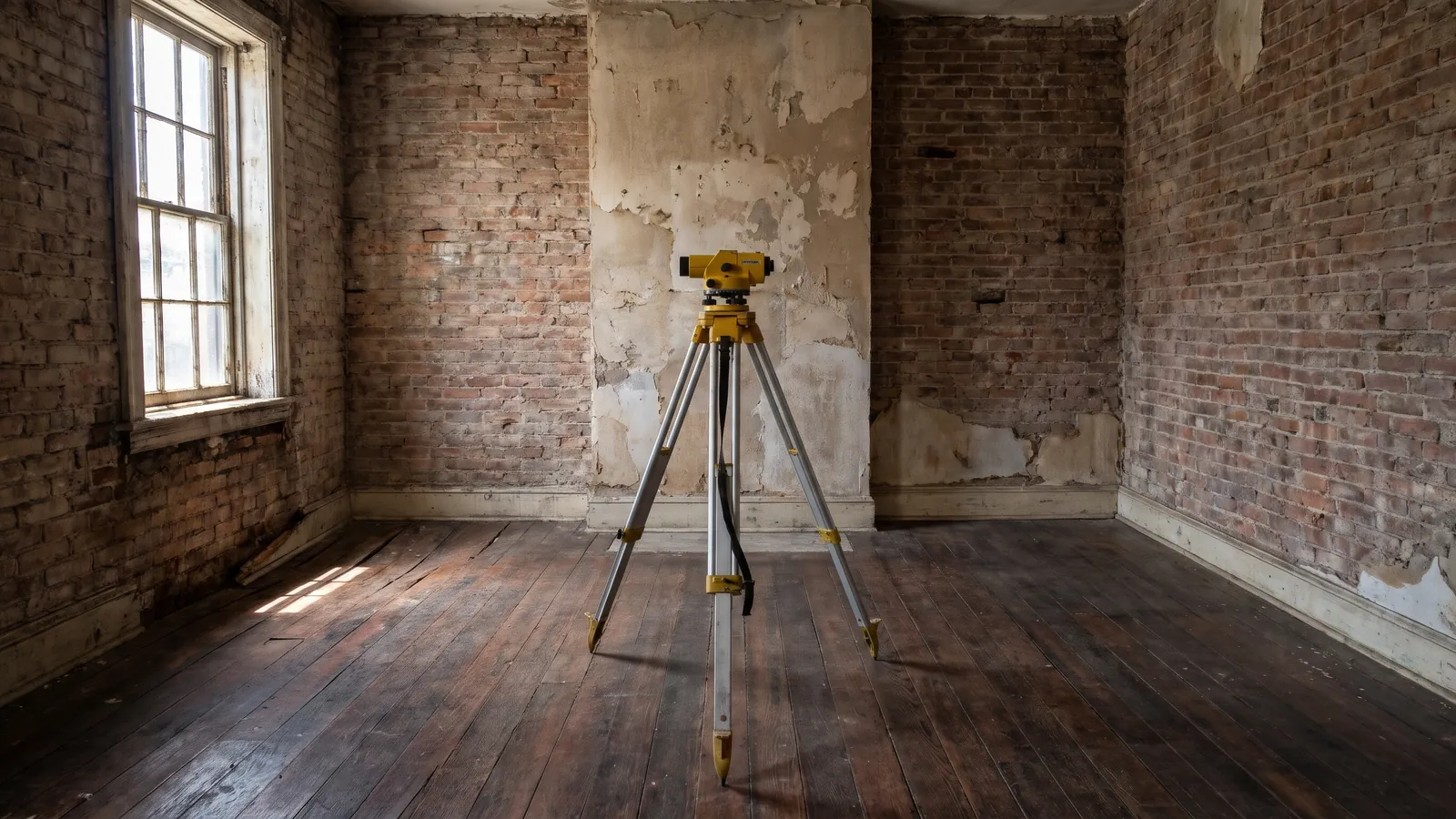
We start by mapping the floors. A rotary laser on a tripod gives a level line through each room, and we record the floor height every few feet. The result is a contour map of the house that shows the low area, how steep the slope is, and whether it matches the cracks you see.
Leveling means lifting the low part back toward the rest, usually on steel piers driven down to firm soil, or on new posts and beams when the problem is inside the crawl space or basement. We lift slowly and watch the plaster and windows, because the right target is the most the house will take, not a number on a chart.
What the work includes
Floor contour map
Heights recorded across every room so the shape of the settling is clear.
Cause traced
Dry clay, soft fill, a leaking downspout or a void: the map and a look outside narrow it down.
Exterior piering
Push or helical piers under the settled section, used to lift and then hold it.
Interior support
Beams shimmed, posts replaced and footings added under sagging floors.
Controlled lift
Lifted in small steps while doors, windows and finishes are watched.
After-map
Heights taken again once the work is done, so you can see the change.
Planning prices in Louisville
| Item | Typical range | What moves the price |
|---|---|---|
| Floor survey with the free inspection | $0 | Included |
| Pier under a settled corner | $1,200 – $3,000 each | Depth to firm soil |
| Interior post or beam correction | $800 – $3,500 | Span, access, number of posts |
| Partial-house leveling | $5,000 – $15,000 | Piers needed, lift height |
Ranges are for budgeting in the Louisville area. Your own price is written down after the inspection, before any work. See the full cost guide.
On the job
Questions about settling and leveling
How much slope is too much?
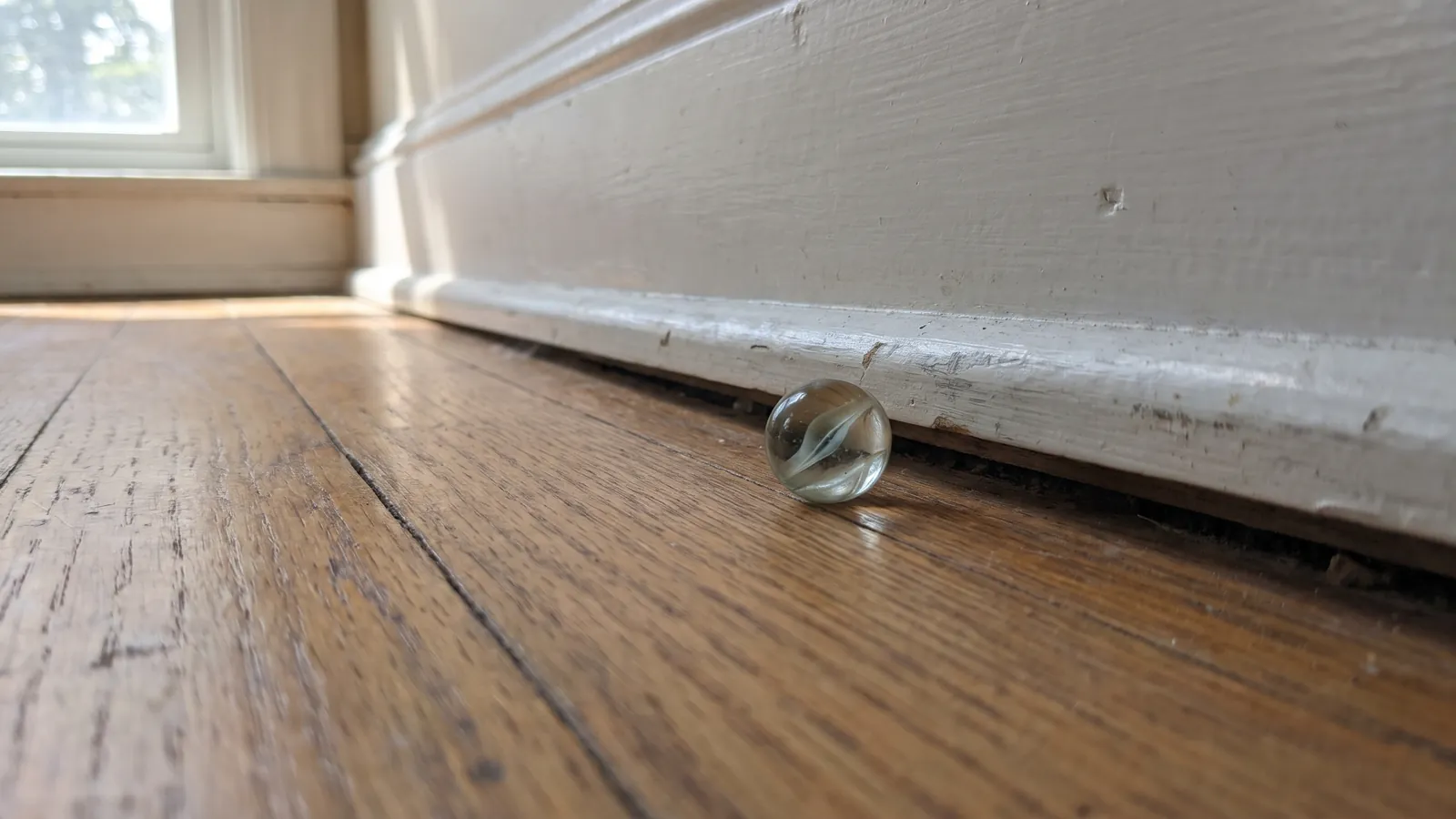
There is no single number, but a slope you can feel walking across a room, or one that keeps increasing, deserves a look. We compare readings over time when the answer isn't obvious.
Will leveling crack my walls?
Lifting can open or close existing cracks. That is why we lift in small steps and stop at the point the house can take. Cosmetic patching after a lift is normal.
Could my floors be sagging from something other than the foundation?
Yes. An undersized beam, a rotted sill or a post on a poor footing in the crawl space can all cause sag. The fix there is inside the house, and much cheaper.
Does settling stop on its own?
Sometimes, once the soil reaches a new balance. Fixing drainage can slow or stop it. Monitoring tells us whether it has.
Related: Piers and Underpinning · Crawl Space Repair · Signs of Foundation Problems · Clay Soil and Karst in Louisville