Ask why Louisville houses crack and you'll hear about three things: clay, limestone and water. They work together.
Silty clay that swells and shrinks
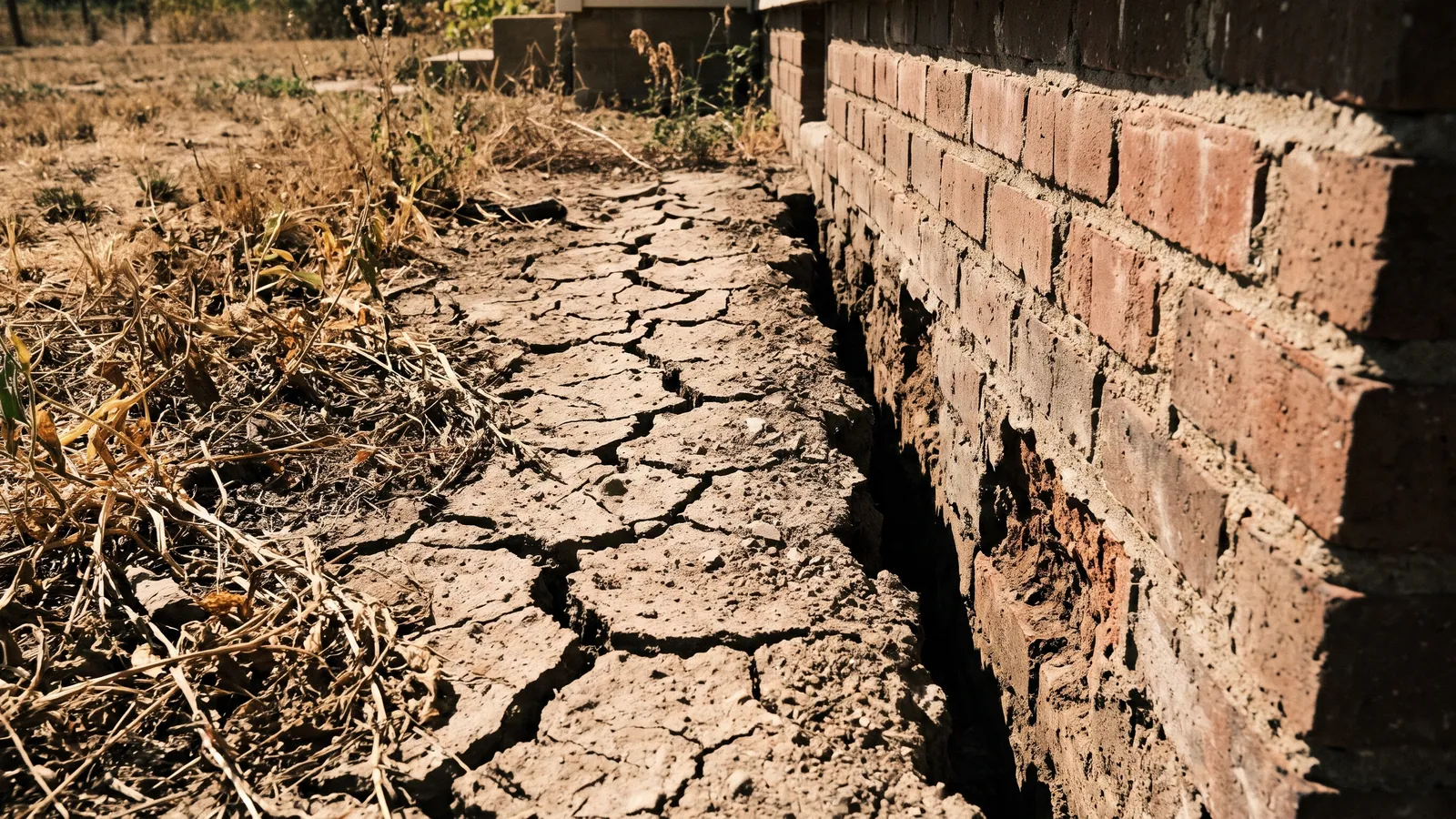
Much of the county's soil is silty clay loam. Clay particles are tiny and flat, and they hold water between them. When the soil gets wet, it swells; when it dries, it shrinks and cracks. Louisville averages about 48 inches of precipitation a year, with heavy spring rain, then often a dry, hot late summer. That swing from soaked to parched is what moves footings.
The effect is uneven. The soil under a corner with a short downspout stays wetter than the soil under a corner shaded by a big tree that drinks the ground dry in August. One corner swells while another shrinks, and the house cracks between them.
Limestone and karst
Under much of Jefferson County lies limestone, and limestone dissolves slowly in groundwater. Over a very long time that creates karst: underground channels, voids and, at the surface, sinkholes. Most houses never have a karst problem. But karst explains why firm bearing for a pier can sit at very different depths from one corner of a house to the next, and why a sudden, localized drop deserves a prompt look.
Freeze and thaw
Winters cross the freezing point many times. Water in the soil near the surface freezes and expands, then thaws. Shallow footings, porch stoops and basement walls feel that push and pull every year. Louisville averages about 13 inches of snow a year, and every melt is more water against the wall.
The river
Near the Ohio, in the low parts of the city and in New Albany and Jeffersonville, the water table can sit high. That means steady water pressure against basement walls, more damp basements, and more crawl spaces that never quite dry out.
What you can do about it
- Carry downspouts at least ten feet from the house.
- Keep soil sloping away from the wall, at least six inches over the first ten feet.
- Keep gutters clear so water doesn't spill over at the foundation.
- Don't plant thirsty trees right beside the house.
- In a long drought, a soaker hose a foot or two from the foundation can keep clay from shrinking away from the wall. Don't flood it.
Sources for the numbers on this page: NWS Louisville climate normals (1991-2020) and USDA NRCS Web Soil Survey.
Quick answers
Is my house on karst?
Much of Jefferson County is underlain by limestone. Whether there are voids under your lot is impossible to know without testing; sudden settling in one spot is the usual clue.
Should I water my foundation in a drought?
Gently, with a soaker hose a little away from the wall, can help keep clay from shrinking. Too much water causes the opposite problem.