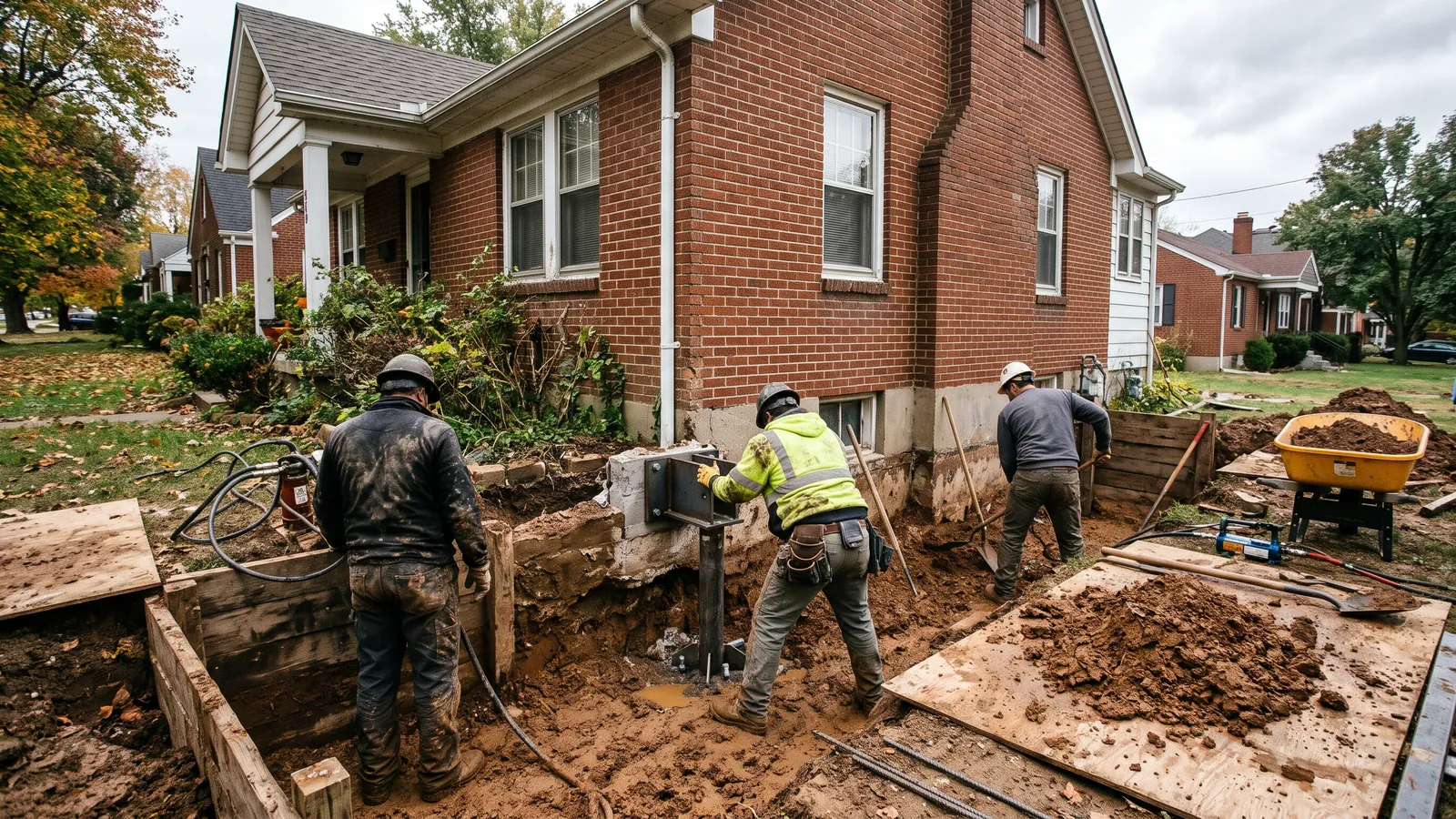
Louisville houses move for a handful of reasons, and they leave different fingerprints. A corner that drops and pulls a stair-step crack through the brick usually sits on clay that dries out under a downspout or a big tree. A long horizontal crack in a block basement wall is pressure from wet soil outside. A floor that sags in the middle of the house is often a tired beam or post, not the footing at all.
So a repair plan here has three parts. Support: piers under the footing where the soil has let it down, or braces on a wall that is being pushed. Water: gutters, downspouts, grade and drains changed so the clay stops cycling between swollen and shrunk. Damage: the cracks closed, the doors trimmed, the gaps sealed once the house has stopped moving.
Skip the first two and the third comes back. That is why our written plan names the cause in one sentence at the top, and every line below it has to answer to that sentence.
Structural foundation work in Louisville Metro needs a building permit from the Construction Review Division at 444 S. 5th Street, and piering usually needs a structural engineer's report before the permit is issued. Both are on your estimate.
What the work includes
Floor survey
Heights taken across every room with a laser, so the low point and the shape of the movement are on paper, not guessed.
Cause named
Soil, water, a beam, a void: one clear cause at the top of the plan, with the evidence that points to it.
Support where needed
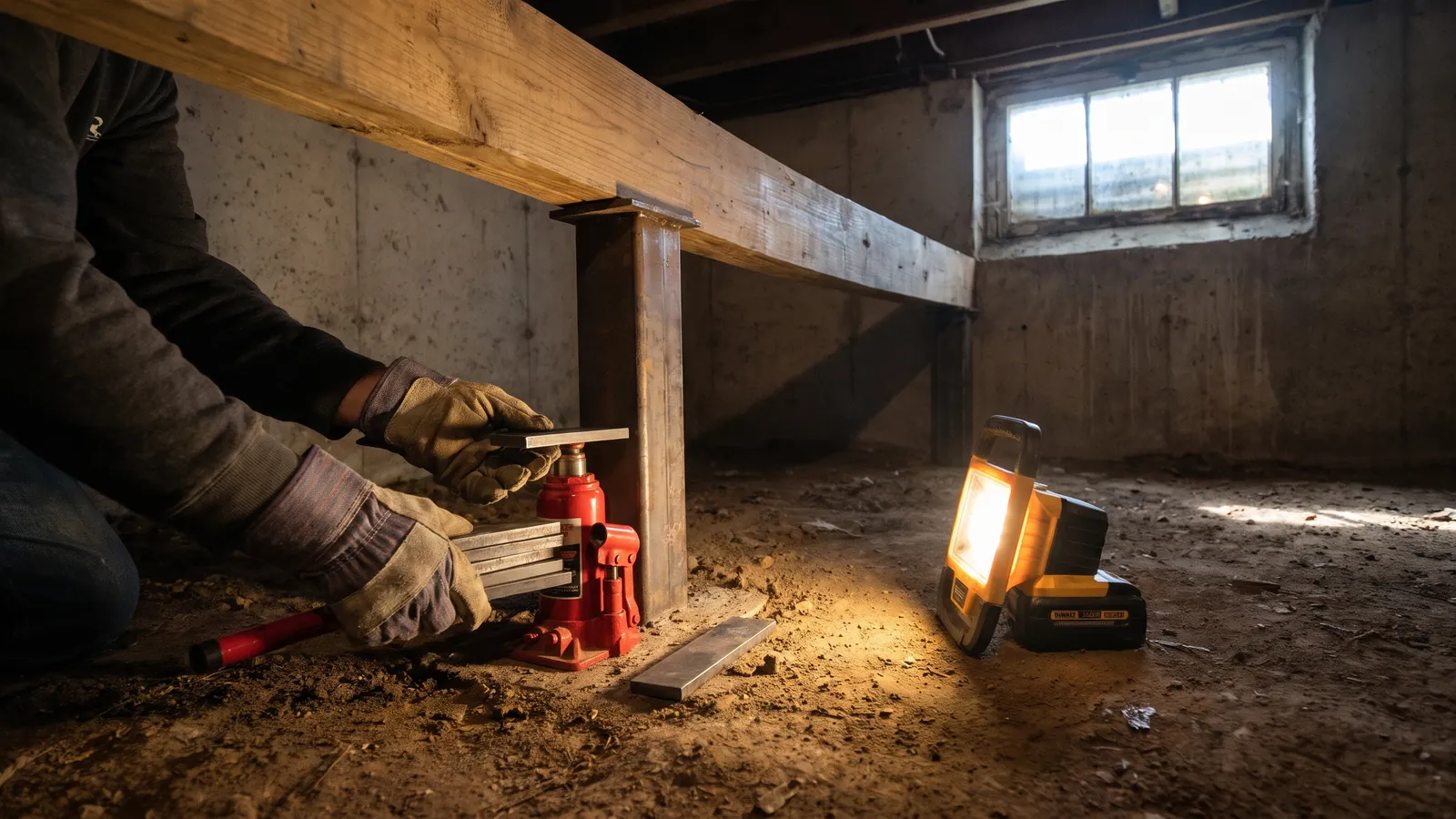
Steel push or helical piers, wall braces or interior posts, sized to the load and the soil.
Water fixed
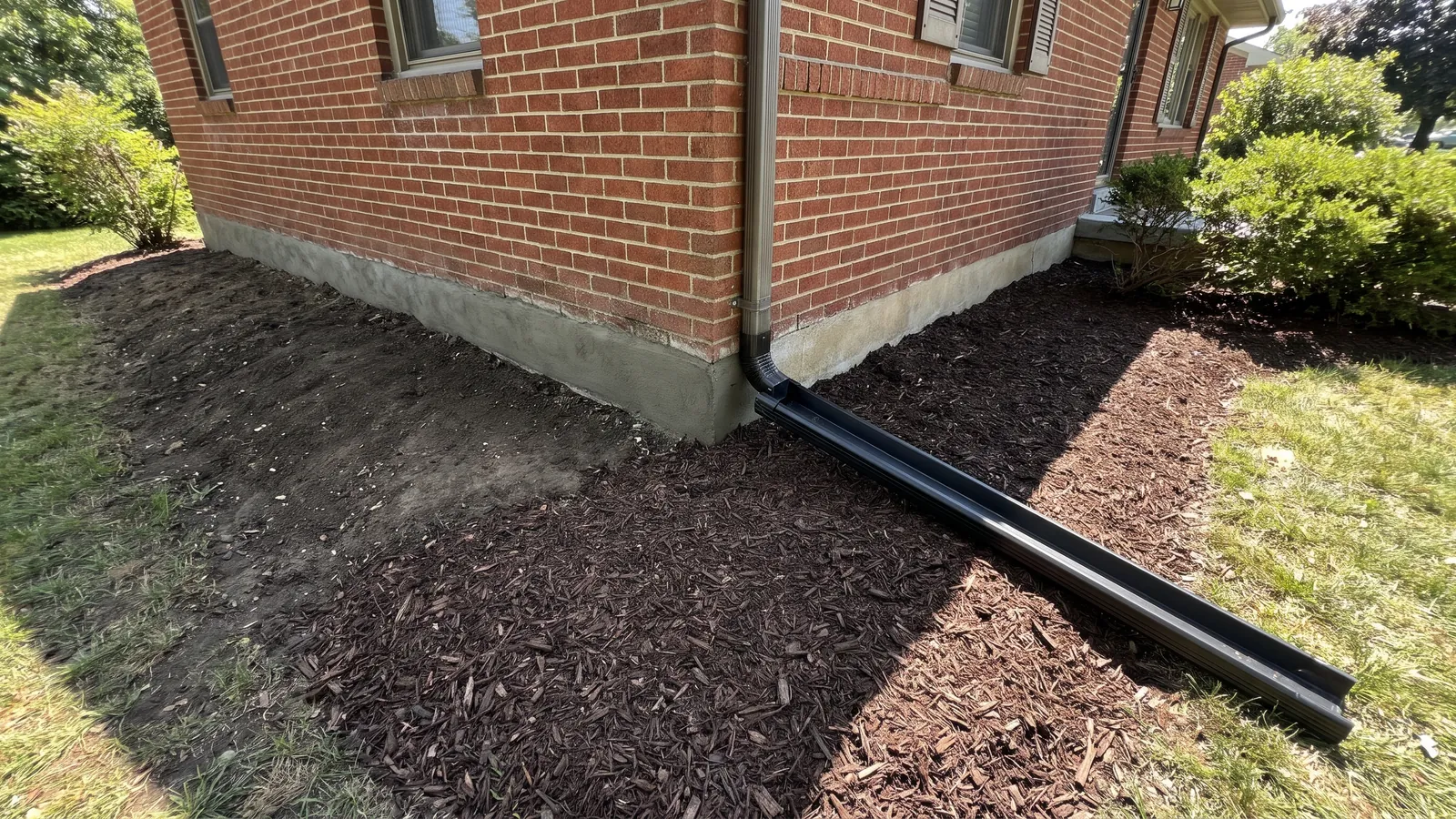
Downspouts extended, grade corrected, drains added where the clay around the footing keeps getting soaked.
Permit and paperwork
Louisville Metro building permit pulled and engineer's report arranged when the work calls for one.
Yard put back
Excavations backfilled and compacted, soil graded away from the wall, mulch or sod replaced.
Planning prices in Louisville
| Item | Typical range | What moves the price |
|---|---|---|
| Free inspection and floor survey | $0 | No charge, no obligation |
| Crack injection (poured wall) | $400 – $900 per crack | Length, access, whether it leaks |
| Steel push or helical pier | $1,200 – $3,000 per pier | Depth to firm soil, access, lift needed |
| Wall bracing (steel or carbon fiber) | $400 – $1,200 per brace | Wall height, bow, finish |
| Typical whole-house repair | $3,000 – $15,000 | Number of piers or braces, drainage work |
These are planning ranges for the Louisville area in 2026, not quotes. Your own price is written down after the inspection, before any work. See the full cost guide.
On the job
Questions about foundation repair
How do I know if it's the foundation or just the house settling?
All houses settle a little in the first few years. Settling that is still going on decades later, cracks that are getting wider, or floors that slope more each year point to a footing problem. A floor survey now and again in a few months tells you for sure.
Will you dig up my yard?
Exterior piers need a hole at each pier, roughly three feet across, along the footing. We tarp the soil, keep the work area tight and put the ground back when we're done. Interior piers and braces mean no digging outside.
Can the house be lifted back to level?
Often partly, sometimes fully. Piers let us lift a settled corner, but brick, plaster and old windows have been living at the new height for years, so we lift only as far as the house will safely go and tell you that number before we start.
How long does a typical repair take?
Crack injection is a few hours. A corner with four to eight piers is usually two to four days once the permit is in hand. Bigger jobs are scheduled day by day on the written plan.
Related: Piers and Underpinning · Settling and House Leveling · Drainage Solutions · Foundation Inspection